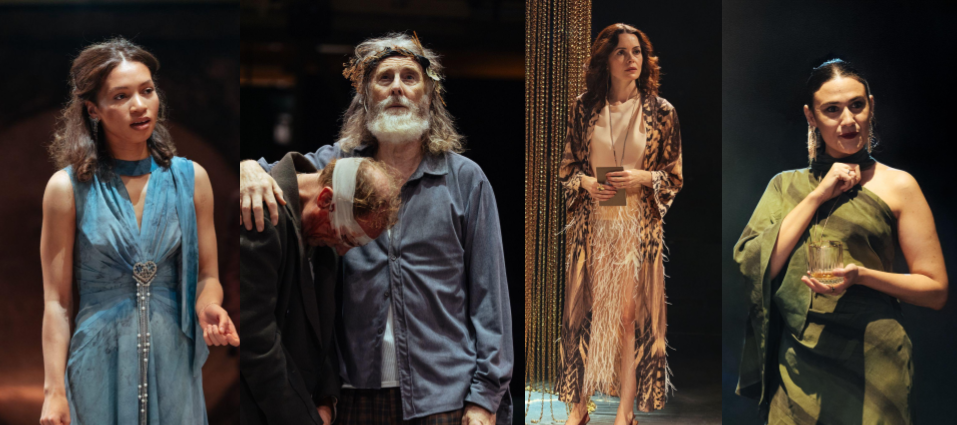
King Lear and his Powerful Princesses
The timeless story of a misguided king whose dedication to flattery unravels his wits. Three daughters, of wildly varying moral fortitude, tug at their father’s heartstrings like a marionette. The daughters become entangled with their male counterparts, in a multi-dimensional love-triangle of adultery and bastardy. A Shakespearean soap opera if you will. King Lear serves up deception, mistaken identities, and several damn gruesome deaths.
As part of the 50th anniversary celebrations, the Royal Exchange are staging variations on the theme of ‘homecoming’. Tragically, the home to which Lear returns is unrecognisable and empty of the family he once shared it with. We watch as the king’s court splits between the loyal supporters and the opportunistic manipulators.
A short supplementary prologue plunges us into the performance. This opening scene offers us a glimpse into the darkness and pathetic fallacy that characterises so much of the play. Yet this classical presentation of the famous text must immediately make way for the new era to burst onto the stage. Fur coats, sharp suits, and loaded whiskey glasses enter; in a directorial move that I’m still grappling with, the opening scene is figured as a rowdy mid-century modern karaoke party. It’s certainly a memorable way to open the show.
Crafting the regal world that we enter, Anna Fleischle’s design centres on a series of chain-mail enclosures that rise and fall from the rafters. These chains cast telling shadows akin to prison bars, they create pseudo-private veiled spaces, they add a textural sense of sexiness to the more illicit scenes, and they beautifully mimic the iconic rainstorm (without flooding the stage!). We are invited to peer through a slightly obscured view into the inner workings of familial and political relationships.
As with almost all shows at the Exchange, there’s a charming sense of place and ‘Northernism’ peeps through in choice moments of this production. Jason Done’s Kent transforms into Caius in a manner perfectly shaped for the local audience: a sophisticated gentleman turned East Manchester wide boy in a matter of moments. It’s snapshots like this that breathe real life and playfulness into this production of Lear.

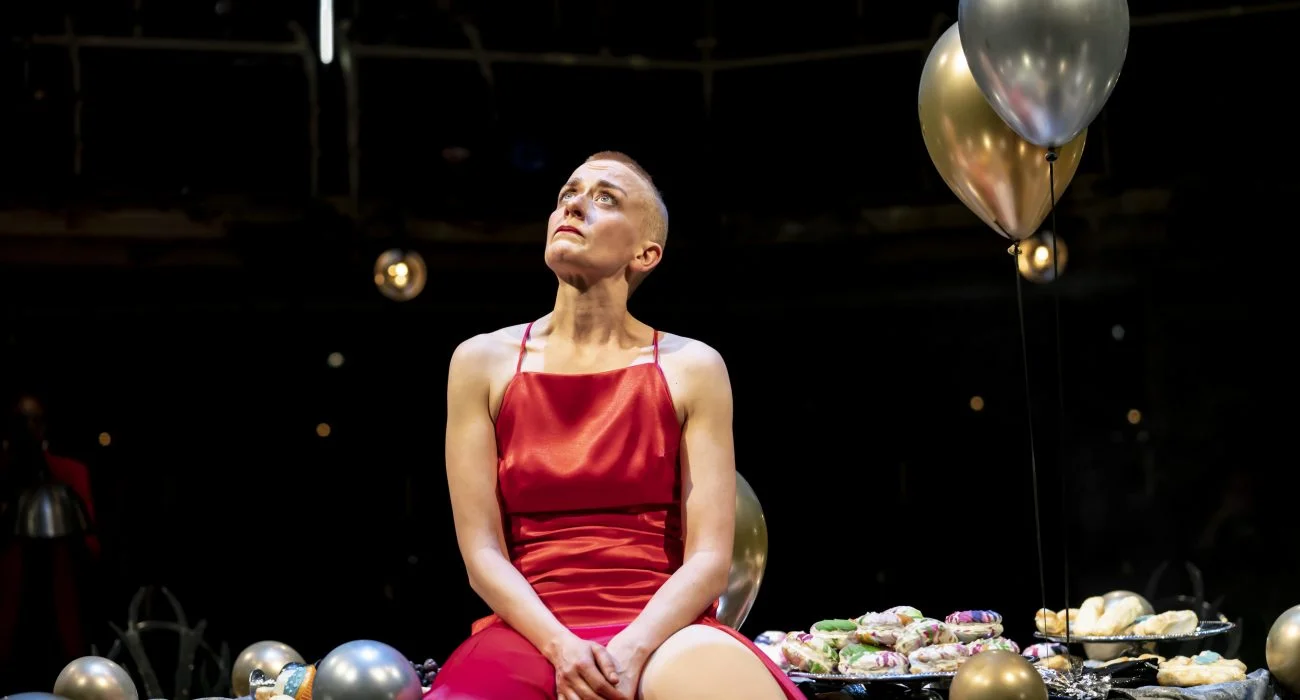
A glimpse of the sexy storytelling woven into this adaptation of the play.
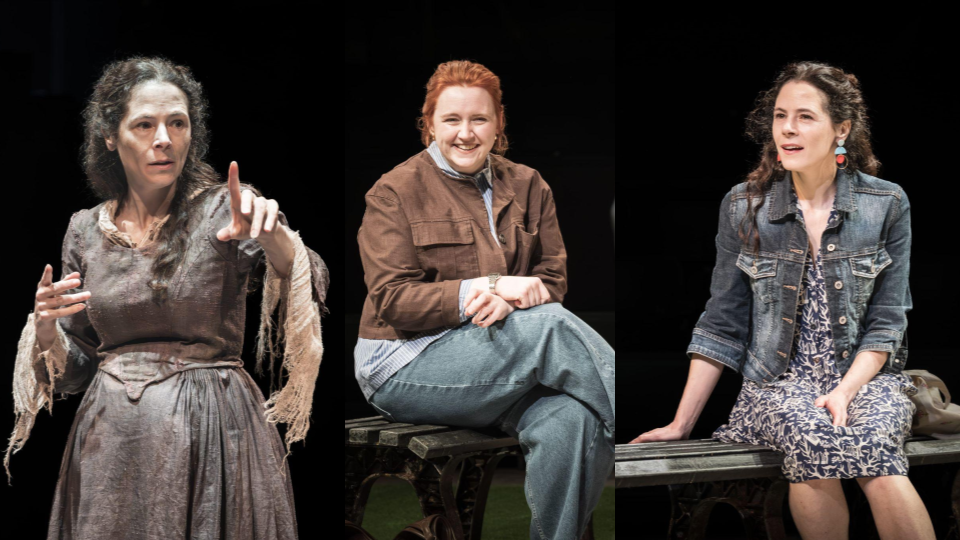
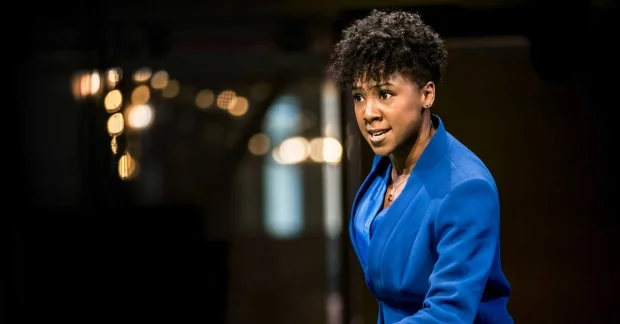
This show invites the audience to be drawn in by all of the lead characters in turn. Many productions of Lear seem to revel in shaping the central sisters to be heartless, land-hungry villains and sycophants. But here, Nadine Shah and Lisa Diveney - as Goneril and Regan - seem to experience gut-wrenching turmoil as they oppose their father. The hurt they feel is palpable, and makes important strides towards underpinning their actions (almost!).
Under Matthew Dunster’s direction, these two sisters are figured quite powerfully as sex symbols, in proud command of their eroticism. There’s something rather “mob boss” chic about their styling (courtesy of Cat Fuller). They retain their femme fatale aesthetic, even when the majority of the company switch to camouflage fatigues. Their glam is their armour and their weapon, which teeters on the brink between formidable and fragile.
The unofficial third spoke to the triad of ‘unloved and ungrateful children’, Paddy Stafford’s Edmund is the charming bad guy who we all hate to love. He leads the charge on taking soliloquies and making them sexy. In fact, almost every speech in this show is afforded an on-stage audience, allowing the cast to inhabit their roles without being forced across the boundary of the forth wall.
Far and away the most powerful casting decision of all, David Threlfall plays both Lear and his fool. Gone are the tedious enunciations from a poetic conscience in a jester’s hat. In his place, a superb dialogue within an unravelling mind.
Director Matthew Dunster curates some wonderful moments of gentleness amidst the rampant rage and warfare. Rather than beckoning his band of followers with royal command, Lear ushers “come come” gently and lovingly to his invisible friend. Moments like this linger with the audience, even as the pace shifts.

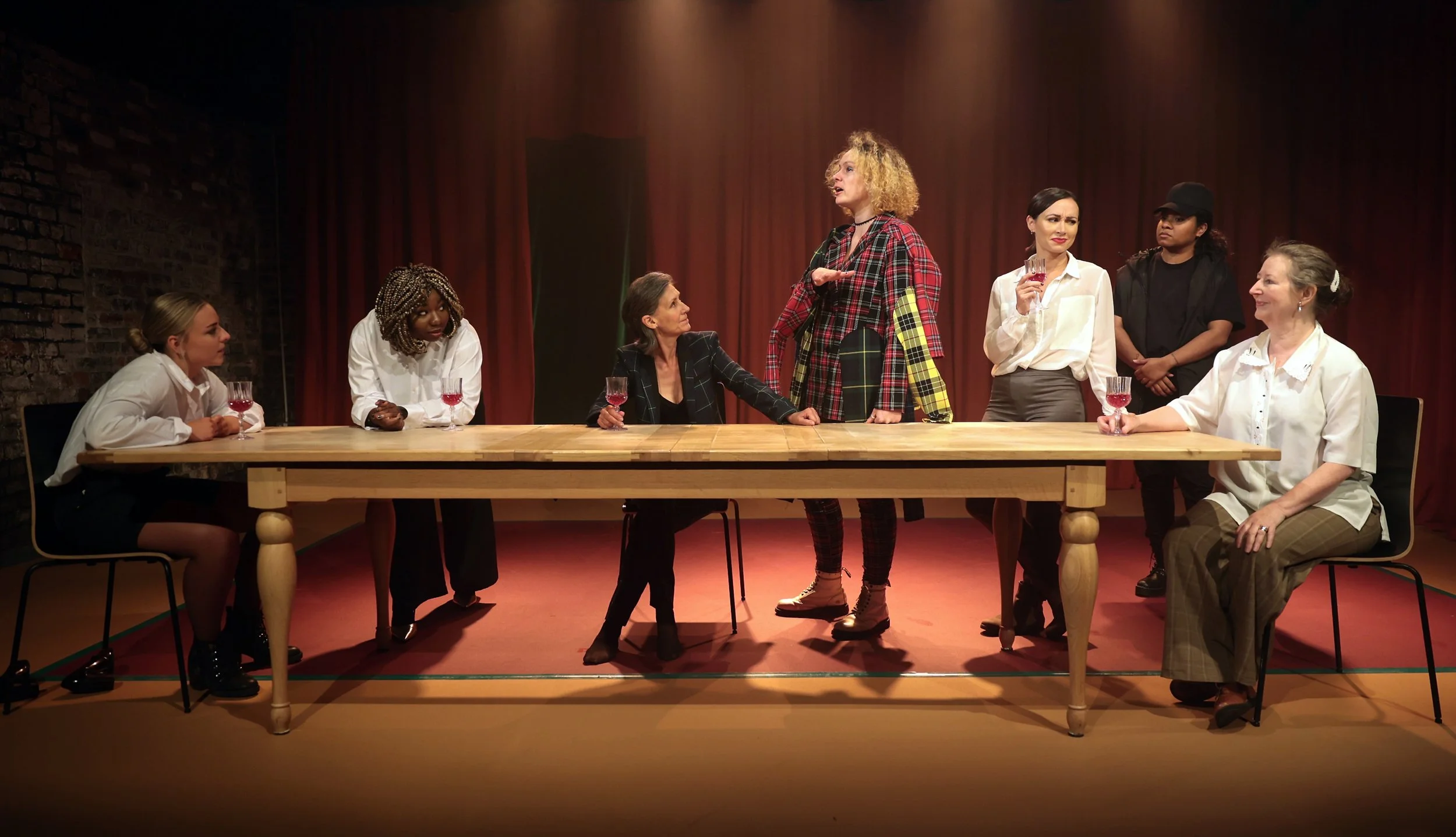
Threlfall as Lear, watched by his daughters.
It’s fair to say that, in the eponymous role, Threlfall is little short of sublime. His characterisation clashes endearing vulnerability with bone-chillingly vacant stares, and sharp bolts of wit in amongst. His late scenes with Gloucester (Jonathan Slinger) and with Cordelia (Isobel Akuwudike) are genuinely heartwarming two-handers, with unexpected glimmers of shared giggles.
Hopefully it’ll come as no great spoiler that, like all of Shakespeare’s tragedies, the stage is littered with bodies by its close. But, in a welcome air of reverence for the female leads, they are afforded the respect of an on-stage death for once. Dunster’s choice grants these women well-deserved attention after several hours of heavy-duty performance.
This latest rendition of King Lear seeks to spotlight the rifts and recurrences that resonate across time. In three hours on the stage, the production never drags. Rather it twists and contorts itself to find newness and nuance in a timeless script. Even those who consider themselves well-read scholars will find an unexpected angle in this play upon which to ponder.
King Lear runs at the Royal Exchange Theatre until 15th November 2026. For tickets and more information, visit the Royal Exchange website.
For more insight into the archives of the Exchange, explore our RX theatre reviews.
Or, if you’re a sucker for some Shakespeare, share opinions on gendered views of Shakespearean drama.
Photo credit: Helen Murray.