Liberation: a passionate play to celebrate Manchester’s role in an ongoing global revolution
Manchester is a city renowned for its revolutionary history; yet barely any summaries of Manc history laud it as the host city of the first post-war Pan-African Congress. Ntombizodwa Nyoni’s new play champions this untold narrative. 80 years after the congress took place on Oxford Road, we have the privilege of meeting the participants.
Nyoni’s production is incredibly generous to its audience. There’s no assumption of existing knowledge (or judgement for a lack thereof). The show introduces each character through the hovering hexagonal screen that demarcates the location of each subsequent scene. Impressively escaping the declamatory, often patronising, introductions of documentary theatre, Liberation is quiet and clear in its approach to audience education. We learn the groups’ names, professions, and countries of origin; the rest is left to unfold through the eloquently crafted dialogues to come.
Paul Wills’ relatively simple stage transforms this iconic theatre in the round into a traverse arrangement of the Chorlton-upon-Medlock Town Hall. As an audience, we become congressional delegates, listening eagerly to some of the powerful rhetoric addressed from centre-stage. Though several members of the cast deliver beautiful written, rousing speeches from the spotlight, the play never feels preachy (a valuable accolade that certainly can’t be applied to all political theatre!). Instead, Liberation rallies its audience and generates conversation long after the interval.
Taking place just a month after the end of the Second World War, the fifth Pan-African Congress sought to define a legacy of freedom from colonial rule. As the title suggests, this play is initially concerned with African liberation. Yet, the production unfurls to present a complex web of other oppressors from which the characters seek to be freed. Liberation is a powerfully feminist production, and one that gives airtime to a range of issues that span from 1945 until now.
Behind the scenes of the united congress, we discover that each character is fighting their own battles. They are at once unified by their cause, yet torn apart by different approaches, priorities, and origins. A huge amount of this anguish is internalised and exclaimed through piercing looks. Nyoni’s script doesn’t take any shortcuts via expository soliloquies; everything is conducted through dialogue and debate.
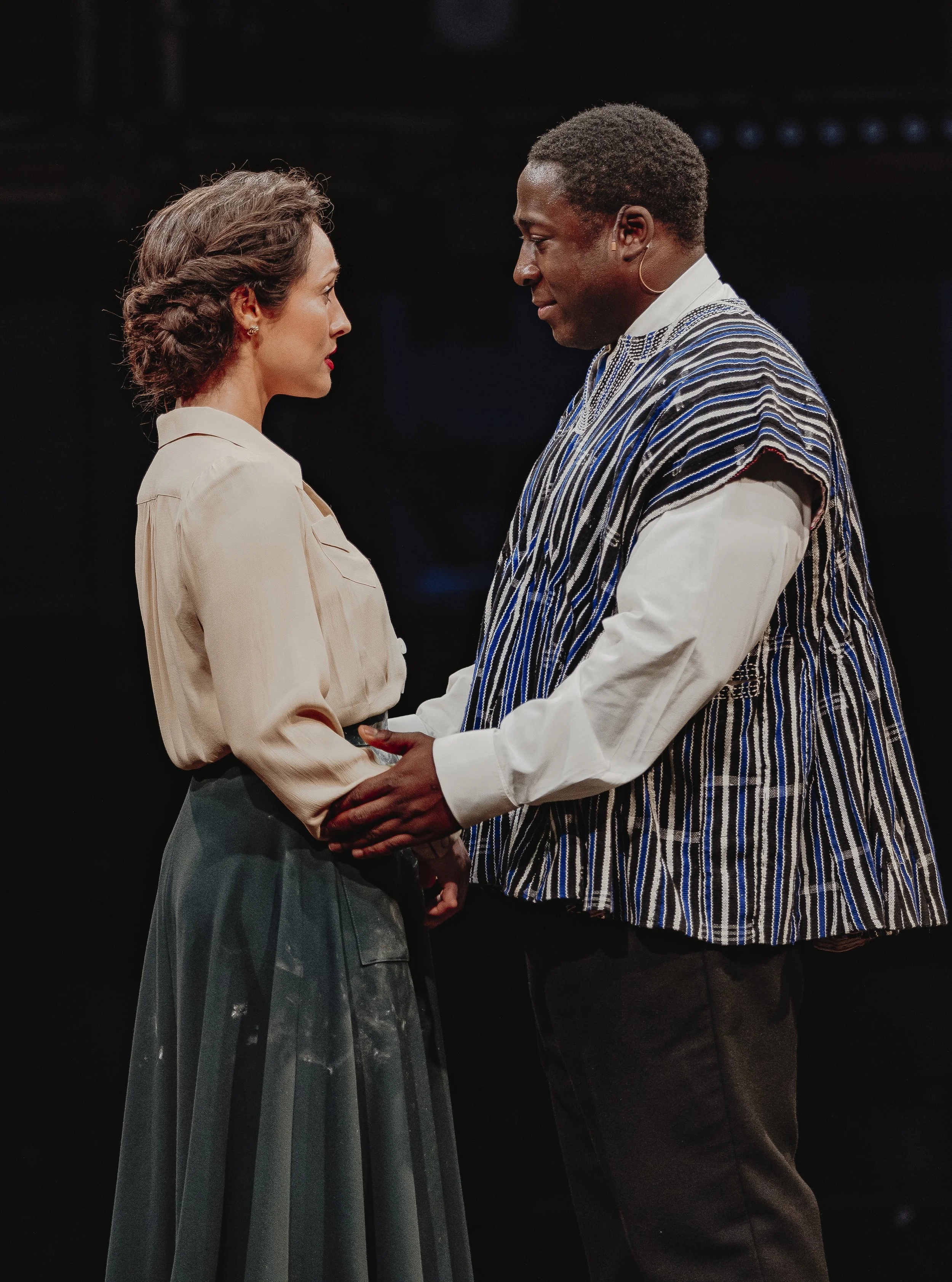
One of several two-handers between Bex Smith and Eric Kofi Abrefa as Betty and Kwame, navigating the complexities of inter-racial relationships in the era.
Full-cast scenes flood the space with energy - either in the formal town hall setting upstairs, or the unbuttoned downstairs of the Cosmopolitan nightclub. These group-dynamics are underpinned by emotive two-handers throughout. All the while, playful, comic moments break the tension, from full scenes of the spokespeople teasing one another like brothers, to brief Mancunian snippets that offset the dramatic political fervour. The light relief reminds us that the palpable tension is not brought by dissent but by a shared sense of heightened passion.

Leonie Elliott as Alma La Badie
There is no single, central storyline or lead role; all of the relationships overlap and intertwine. Yet the four women are undeniably placed at centre of this story - determined to dilute the “boys club” of politics in the ‘40s (and, indeed, the present day!). The female roles - in their writing, directing, and performance - are fascinating and challenging. We witness very different approaches to campaigning for liberation whilst also fighting for their own place in that very fight. Alma La Badie, played vehemently by Leonie Elliott, is a force to be reckoned with. Dissatisfied, disapproving, and disappointed, she feels everything incredibly deeply and delivers some of the most potently cutting lines of the show.
Director, Monique Touko and her team of designers have shaped a beautiful frame for Nyoni’s words. Carefully chosen props, immaculate costumes, and wonderfully subtle lighting shifts transport us to the era (and the weather!) of each scene. Whilst the music, composed by Ife Ogunjobi, brings depth to a very wordy show.
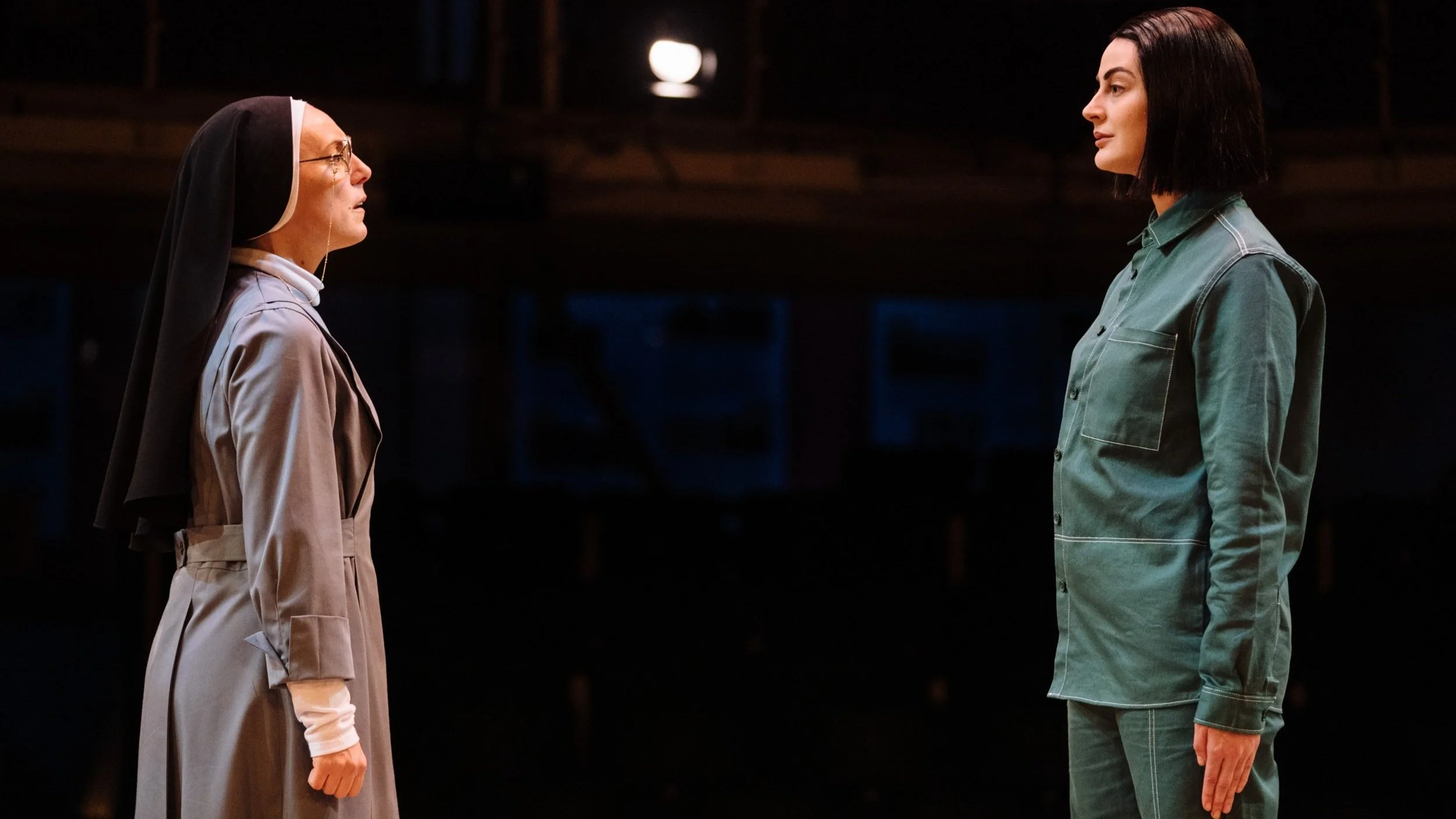
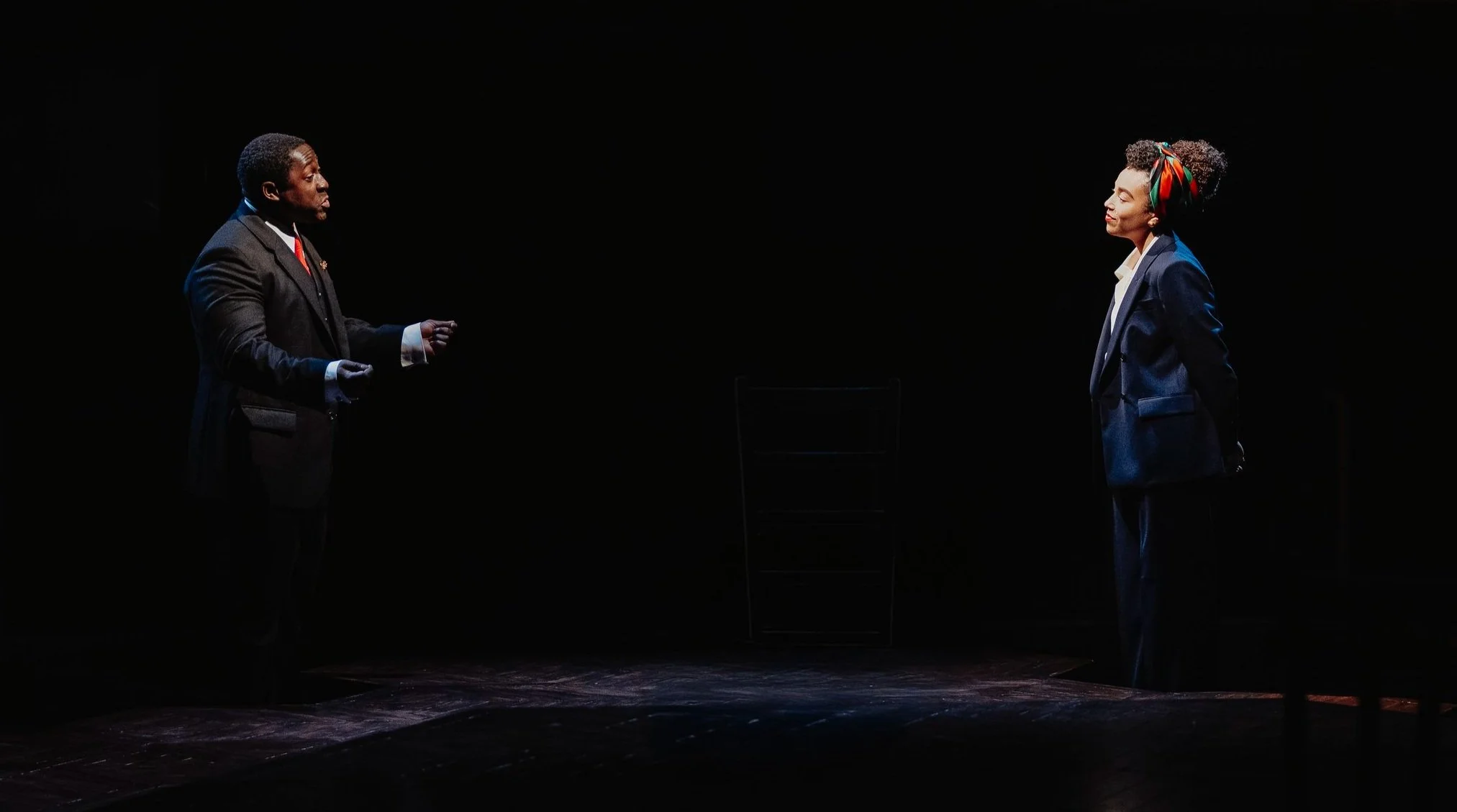
Through their simplicity, the design choices make room for the cast to explore the intricacies of their speech. The very shape of the stage alone transforms platforms into insurmountable blocades. What begins as a central stage for shared ideals and a collective cause becomes a dimly-lit gulf between the characters. Some of the most insightful two-handers see the cast butt head from either side of the central platform, maintaining their distance and quite literally struggling to find middle ground.
Liberation offers up an empowering, inspiring evening of theatre. The atmosphere within the theatrical module is tense, but also loving and welcoming. As the founders make way for the next generation to shape the movement and manifesto in their own ways, we are invited to become a part of the congress. The cast invites us to engage and to feel a part of a major political movement.
The show presents universal experiences of seeking belonging, fighting for your place, and pushing back on being sidelined for race, gender, age, culture, or who you love. In doing so, Liberation actively looks beyond its own historical setting. And the very building of the old exchange house, draped in the flags of the characters’ home nations, encourages us to take this play beyond the confines of the theatre alone.
Liberation runs at the Royal Exchange Theatre, Manchester until 26th July - and forms part of the 2025 Manchester International Festival. For tickets and more information, visit the Royal Exchange website.
Or explore our archive of RX Theatre reviews to learn more about what you might expect from this iconic Manchester theatre.
Photo credit: Isha Shah Photography